Who Can Officiate a Wedding in Colorado? The Short Answer Is: Almost Anyone
In Colorado, three categories of people can legally marry you: ordained ministers (including someone who got ordained online ten minutes ago), judges, and you yourselves. That last one surprises people. Colorado is one of a handful of states where a couple can legally marry themselves with no officiant present at all.
That's the quick answer. The longer answer involves understanding the difference between who can perform your ceremony and who can sign your marriage license, because in Colorado those don't have to be the same person, and mixing them up is where couples get confused.
The legal options, one by one
Ordained ministers
Any minister, priest, rabbi, imam, or clergy member from a recognized religious organization can sign a Colorado marriage license. "Recognized" is interpreted broadly here. Colorado courts have consistently upheld online ordinations from Universal Life Church, American Marriage Ministries, and similar organizations. My own ordination is through ULC.
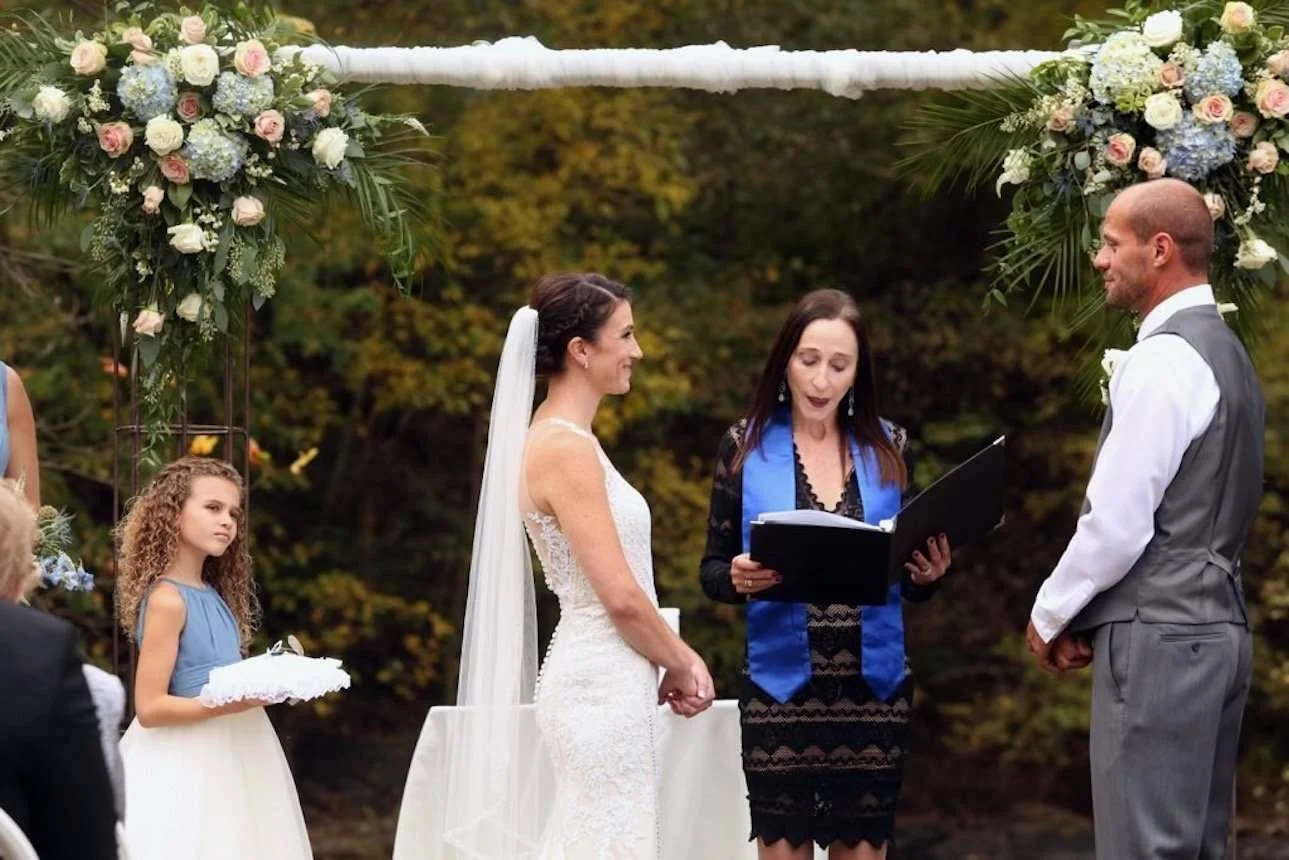
This means your best friend, your sibling, your coworker, anyone you care about can become legally qualified to officiate your wedding in the time it takes to fill out a short online form. The ordination itself is usually free. Some sites charge for a physical certificate, but the ordination is what matters legally, not the paper.
A few things to know if you're going the online ordination route:
The person should get ordained well before the wedding day, not the morning of. It's technically instant, but having the certificate in hand and a confirmation email on file prevents last-minute stress. A month ahead is a reasonable buffer.
They should save their ordination confirmation in multiple places. Colorado doesn't require officiants to register with any government office, but the county clerk may ask to see proof of ordination when you turn in your signed license. Having a PDF of the certificate on a phone is usually enough.
Not every county clerk is equally familiar with online ordinations. The vast majority accept them without question. Occasionally, in smaller rural counties, a clerk will hesitate. If this happens, referencing Colorado Revised Statute 14-2-109 tends to resolve it. That's the statute that defines who can solemnize a marriage in the state, and it doesn't distinguish between in-person and online ordination.
Judges
Active and retired judges, magistrates, and justices of the peace in Colorado can officiate weddings. This is the most legally airtight option, since nobody is going to question whether a sitting judge has the authority to marry you.
The tradeoff is flexibility. Most judges perform weddings as a side function of their role, not a primary service. The ceremony tends to be short and standardized. Scheduling works around the court calendar, not your preferred sunset time. If you want a personalized ceremony with your love story woven in, a judge probably isn't the right fit. If you want a quick, no-frills legal marriage with unquestionable validity, it's a solid choice.
Some judges will perform ceremonies at your venue. Others only do them at the courthouse. Ask before you assume.
Self-solemnization (marrying yourselves)
This is Colorado's most unusual option and the one that catches people off guard. Under Colorado law, a couple can solemnize their own marriage. No officiant required. No witnesses required. You sign the license, your partner signs it, and it's legal.
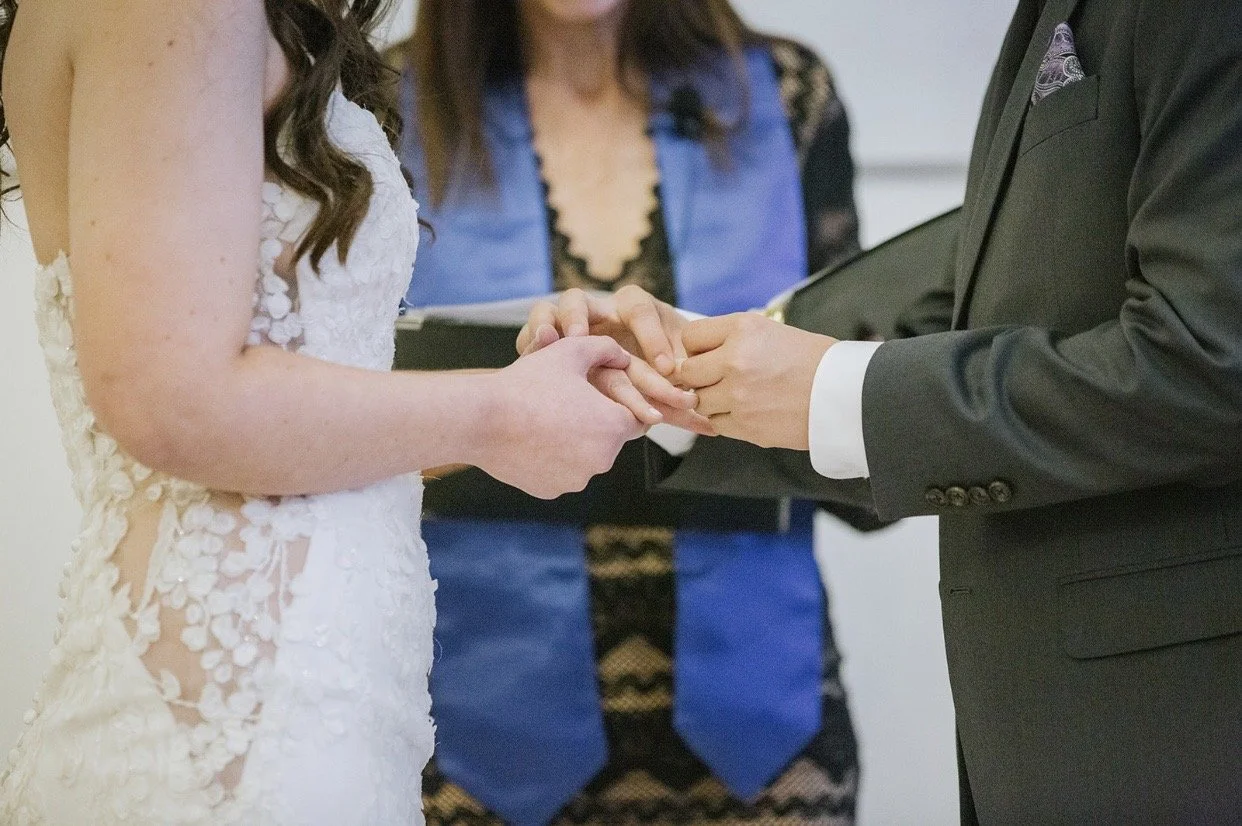
When you pick up your marriage license from the county clerk, tell them you plan to self-solemnize. They'll make sure the license is set up correctly for that option. You'll both sign as the parties to the marriage, and you can designate any two adults as witnesses on the license (this is optional but recommended).
Self-solemnization doesn't mean you can't have a ceremony. You absolutely can. You can have your best friend lead the ceremony, read vows, do the whole thing exactly the way you want. That person just isn't the one making it legal. You are. They're performing the ceremony, you're solemnizing the marriage. Two different functions.
This option has become popular with elopement couples, courthouse-allergic couples, and anyone who wants complete control over every aspect of their wedding without worrying about officiant credentials. It's also a clean solution for interfaith couples who don't want to choose one religious tradition's officiant over another.
The distinction that trips people up
Here's where Colorado differs from most states: the person standing in front of you at the ceremony doesn't have to be the person who makes it legal.
You can have your childhood friend lead the ceremony, tell your love story, guide you through vows, and do everything you'd expect an officiant to do. Then you sign the license yourselves through self-solemnization, or have a quietly ordained family member sign it. The ceremonial role and the legal role are completely separable.
This matters because it takes the pressure off. Your friend doesn't need to worry about whether their online ordination will hold up. Your aunt who's a retired judge doesn't need to write a personalized 20-minute ceremony. You can split the jobs to play to everyone's strengths.
About half the self-solemnization weddings I work at use this exact setup. I write and perform the ceremony. The couple handles the legal paperwork themselves. It simplifies everything.
The marriage license itself
Regardless of who officiates, the marriage license works the same way. You apply in person at any Colorado county clerk's office. Both partners need to be present with valid photo ID. There's no waiting period, no blood test, no residency requirement. You can fly into Colorado, get your license, and get married the same day.
The license is valid for 35 days once issued and can be used anywhere in the state, not just the county where you picked it up. So you can get your license in Denver on a Tuesday and use it for your Saturday ceremony in Estes Park.
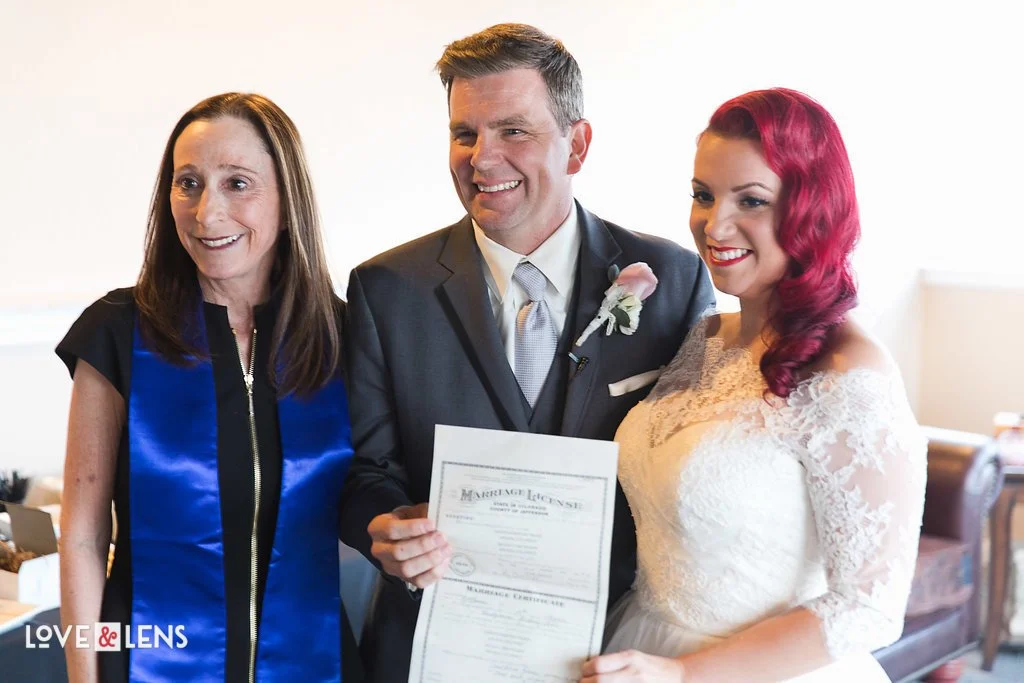
Cost varies by county but typically runs $30 to $50. Some counties offer online pre-registration to speed up the in-person visit. Denver, Boulder, and Larimer counties all have this option.
After the ceremony, the signed license needs to be returned to the issuing county within 63 days. Most officiants handle this filing, but if you self-solemnize, that responsibility falls on you. Don't let it sit in a drawer. An unfiled license doesn't void your marriage, but it creates paperwork headaches later when you need certified copies.
What about destination wedding couples?
Colorado's combination of no residency requirement, same-day licensing, and self-solemnization makes it one of the easiest states for destination weddings. Couples fly in from out of state, pick up their license, and get married the same weekend. No pre-planning required on the legal side.
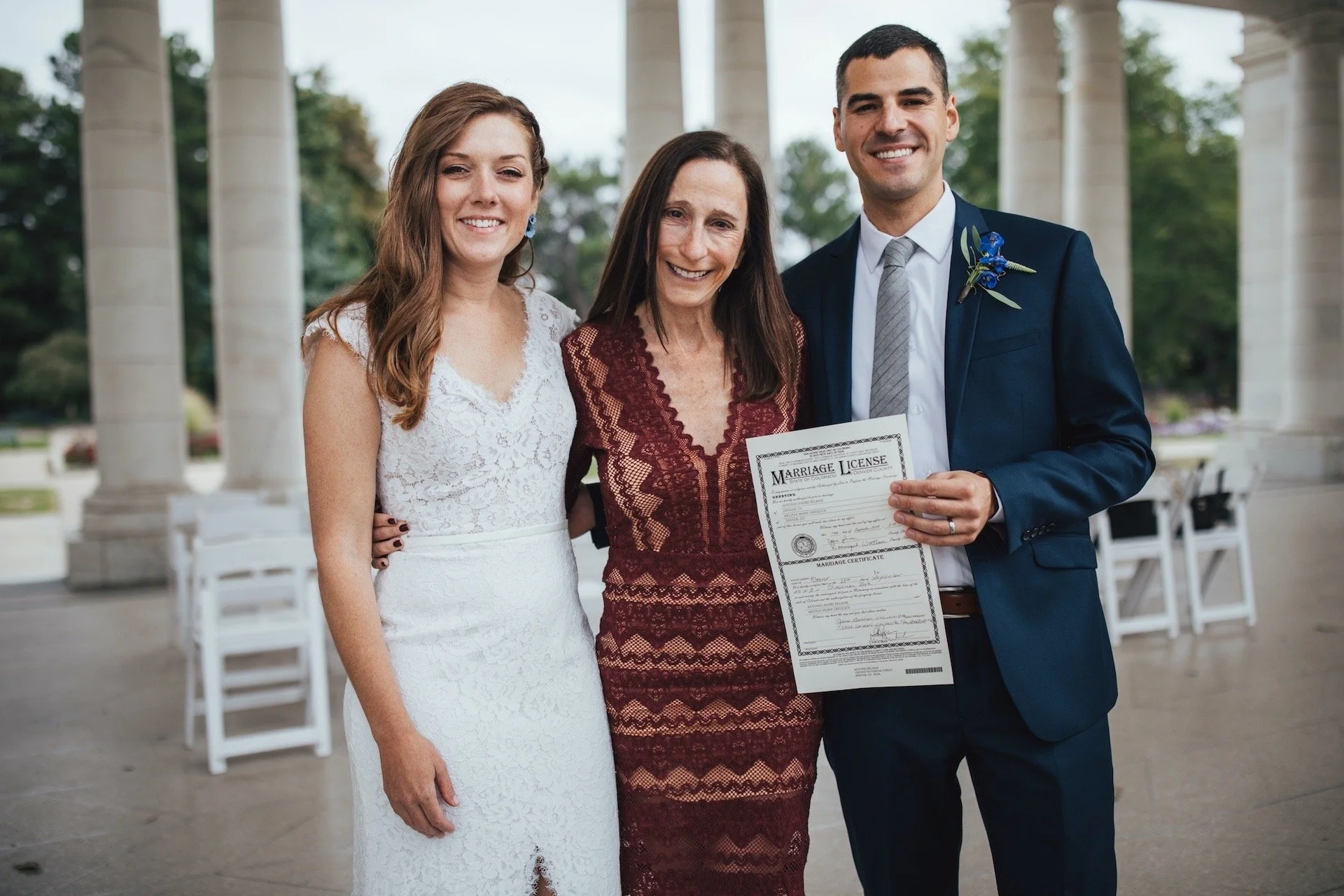
The one thing out-of-state couples sometimes don't realize: if you bring an officiant from another state, their ordination or authority still needs to be valid under Colorado law. A friend ordained through ULC in California can officiate in Colorado, since Colorado recognizes the ordination, not the state of origin. But a notary public authorized to perform marriages in Florida doesn't automatically have that authority here. When in doubt, self-solemnization sidesteps the question entirely.
Frequently asked questions
Can my friend officiate without getting ordained? They can lead the ceremony, absolutely. They just can't sign the marriage license unless they're ordained or you use self-solemnization. Many couples have a friend perform the ceremony while handling the legal paperwork themselves.
Is an online ordination really legal in Colorado? Yes. Colorado courts have upheld online ordinations repeatedly. Universal Life Church and American Marriage Ministries are the most widely recognized. Keep the confirmation email and certificate as documentation.
Do we need witnesses? Colorado does not legally require witnesses for a marriage to be valid. The marriage license has spaces for witness signatures, but leaving them blank doesn't affect the legality. That said, having witnesses sign is a good practice for record-keeping.
Can we get married anywhere in Colorado with our license? Yes. The license is valid statewide regardless of which county issued it. Get it in Boulder, use it in Telluride. No restrictions.
What happens if our officiant forgets to file the license? Your marriage is still legally valid from the moment the ceremony takes place and the license is signed. Late filing doesn't undo your marriage. But getting the license on file promptly makes it much easier to get certified copies, which you'll need for name changes, insurance updates, and tax filings.
Can two people officiate the same ceremony? Yes, though only one person signs the license as the officiant. Some couples have two people share the ceremonial duties, perhaps one friend for the welcome and another for the vows, while designating one of them as the legal officiant on the paperwork. This works well and happens more often than you'd think.
Choosing the right option for your ceremony
The choice usually comes down to what matters most to you. If having one trusted person handle everything (ceremony and legal signing) feels simplest, ordain that person or hire a professional officiant. If you want to separate the ceremonial from the legal, self-solemnization gives you that flexibility. If absolute legal certainty is the priority above all else, a judge or established clergy member is the safest bet.
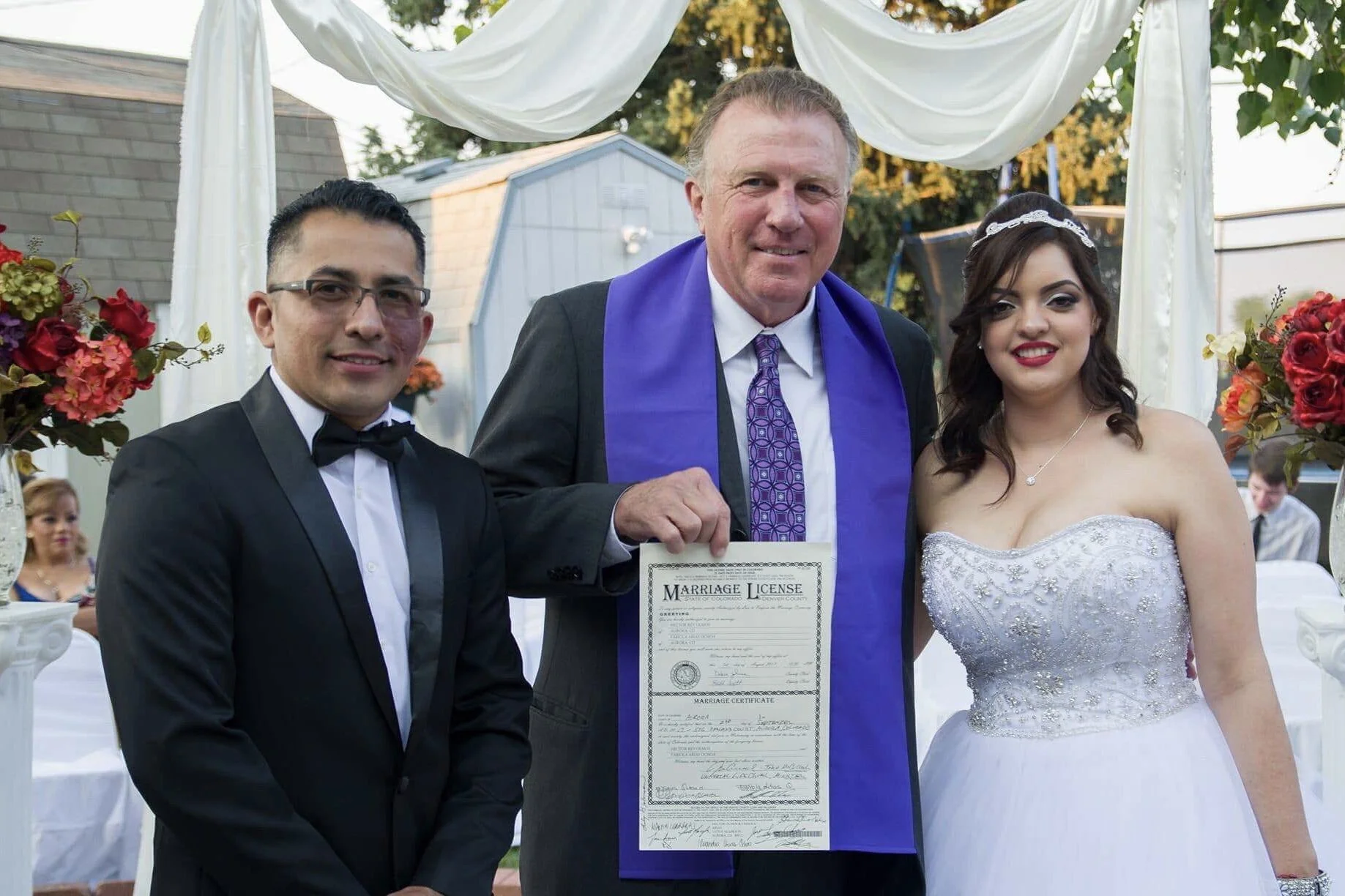
Most couples I work with end up choosing a professional officiant because they want someone who will write a personalized ceremony, manage the logistics on the day, and handle the license filing afterward. But the beauty of Colorado law is that there's no wrong answer. The state gives you options, and all of them produce an equally valid marriage.
If you're weighing your options and want to talk it through, reach out. This is one of the first questions most couples ask, and it's worth getting right before everything else falls into place.
