Wedding Vow Examples Worth Stealing (and How to Write Your Own)
The groom had flour tortillas in his jacket pocket.
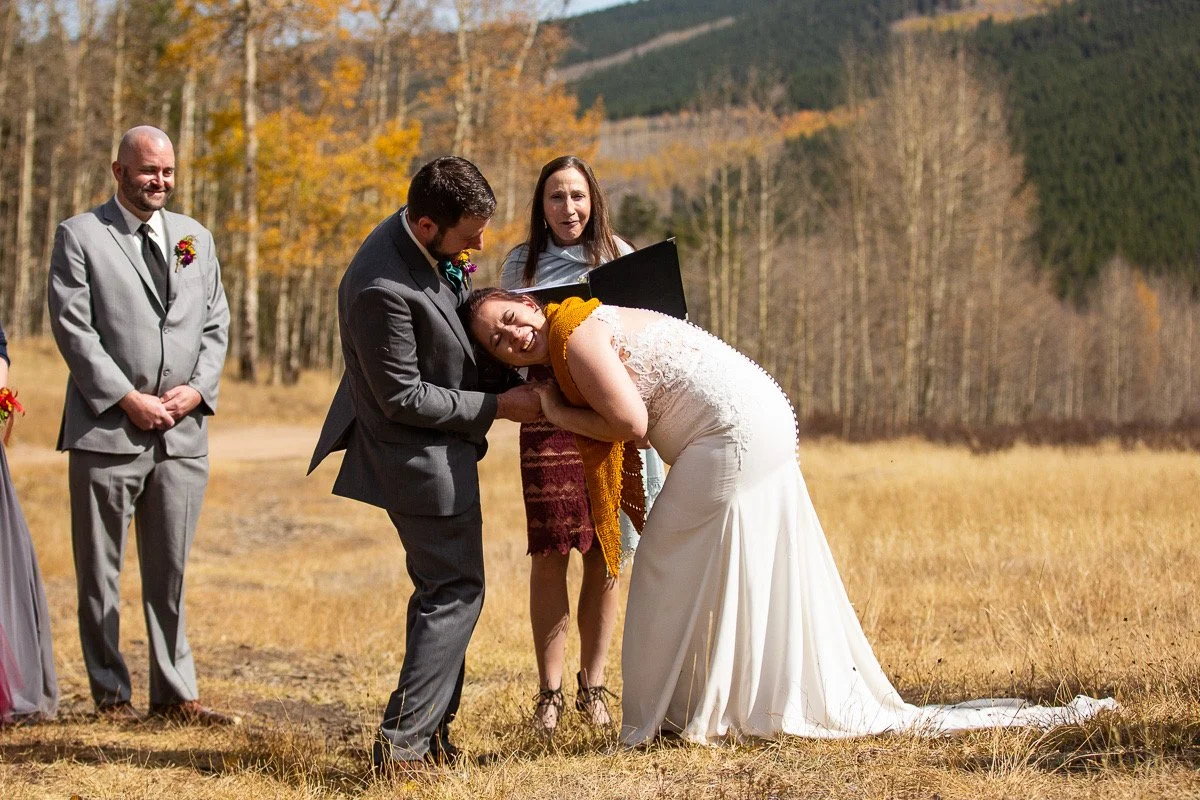
Not metaphorically. Actual flour tortillas, stuffed into his coat from one of their early dates. His bride brought it up during their vow exchange at a fall ceremony in Estes Park, and the entire tent lost it. Guests howling. The bride laughing through tears. One weird, perfect detail that said more about their relationship than a thousand polished words could.
That moment is the whole secret of good wedding vows. It's specificity, not eloquence, that makes a room go silent or makes a groomsman quietly lose it in the back row. The vows that stick with people are never the ones that try to sound impressive. They're the ones that sound unmistakably like two specific people.
Why Most Wedding Vows Sound the Same (and Yours Don't Have To)
Google "wedding vow examples" and you'll find pages of interchangeable templates. "You are my everything." "I promise to love you unconditionally." "You complete me." They're fine. They're also forgettable, because they could be spoken by literally any couple on earth.
The vows that land are different. A groom once turned to his bride and said: "There is a point where the idea of home changes from a place to a person. You realize that you are exactly where you are supposed to be. You are home to me." The room went completely still. It worked because those words belonged to him and nobody else.
Three things separate forgettable vows from unforgettable ones:
One specific detail only the two of you share. Not "you make me laugh" but "you do that impression of my mother ordering at restaurants and it destroys me every single time."
A real promise, not a sentiment. "I will love you forever" is a feeling. "I will always be the one who restarts the fire when it goes out" is a commitment you can hold someone to.
Brevity. Two minutes, max. Anything longer and nerves eat you alive. The number of beautiful vow moments that dissolve into sobbing by paragraph four is... significant.
Need help writing vows that sound like you? Book a free consultation — I help couples find the words.
Real Vow Patterns Worth Stealing
Every couple is different, but after standing at the front of 700+ ceremonies, clear patterns emerge in what works. These aren't templates. They're frameworks you can bend to fit your own voice.
The "I Choose You" Vow
This structure surfaces again and again, and it works every time because it frames marriage as an active decision rather than a passive state:
"I choose you, and I will choose you over and over. Without pause, in a heartbeat, I will keep choosing you."
One bride adapted this into something even more grounded: "I chose you when things were easy. I choose you now when things are complicated. And I will choose you tomorrow when things are whatever they're going to be." She didn't need a single metaphor to make the room feel it.
The Beginner's Mind Vow
This one comes from a philosophy about approaching your marriage with curiosity instead of certainty. The idea: marriage works when both people keep coming back with a beginner's mind, treating each other as someone still worth discovering, even twenty years in.
"I promise to never assume I know everything about you. I promise to stay curious. I promise to keep learning who you are, even when I think I already know."
Couples who gravitate toward this framework tend to be the ones who understand that love isn't a destination. It's a practice.
The Tiny Story Vow
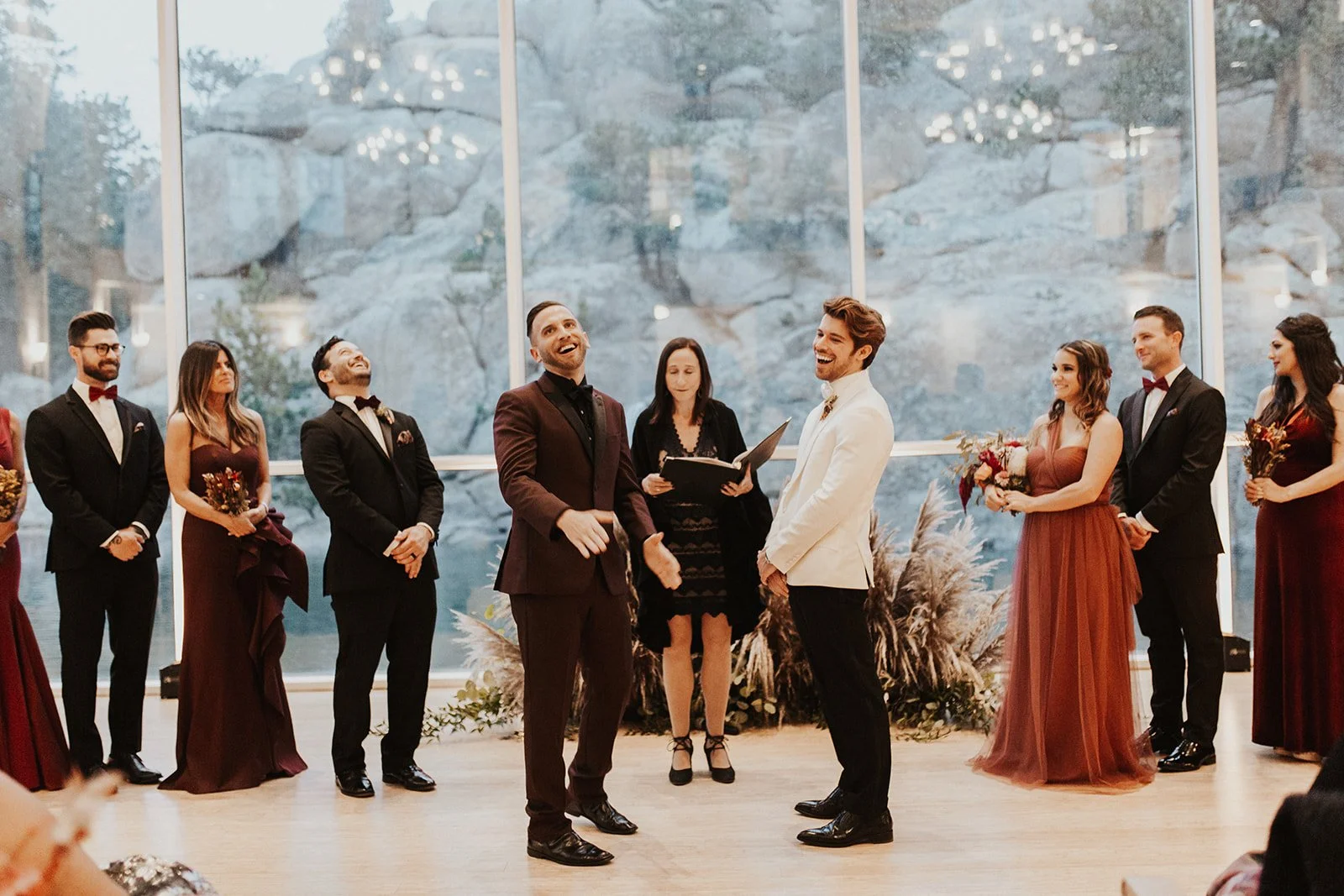
Some of the most powerful vows are just anecdotes with a promise attached. A groom told the story of asking his partner how to use the dishwasher early in their relationship. She showed him. He nodded. Then he loaded it with regular dish soap and flooded the kitchen with suds. During the ceremony, he turned to her and said: "You haven't let me use the dishwasher since. And honestly, that might be the foundation of our whole relationship. You knowing exactly when to step in, and me knowing exactly when to let you."
The guests lost it. And then everybody cried. Because it was funny, and real, and underneath the joke was a genuine understanding of how they work as a team.
Traditional Vows (They Still Work)
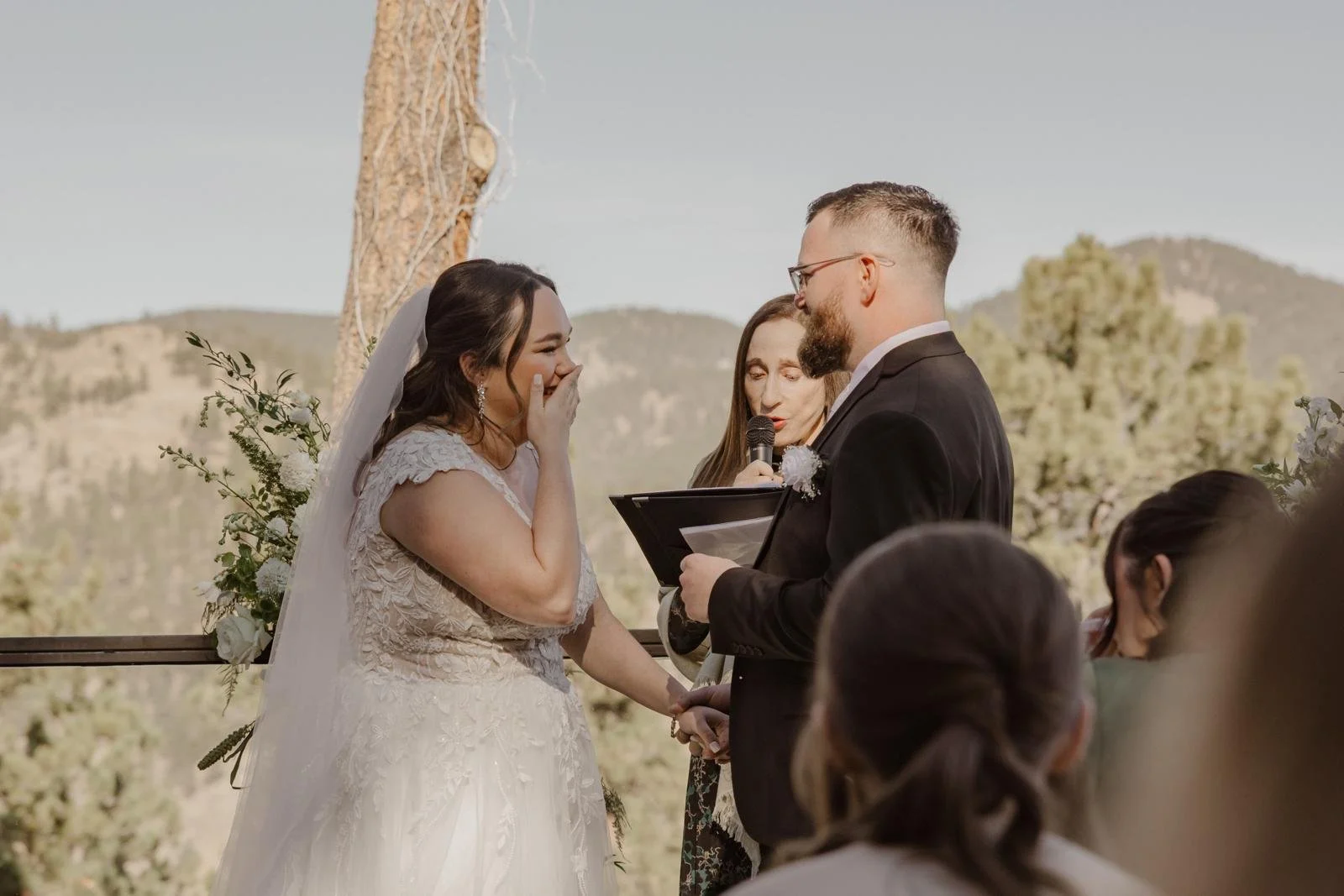
Not every couple wants to write from scratch. Traditional vows carry weight precisely because millions of people have spoken them before you. That accumulated weight is exactly what makes them resonate.
"I take you to be my [husband/wife/partner]. I promise to be true to you in good times and in bad, in sickness and in health. I will love you and honor you all the days of my life."
The difference between traditional vows that fall flat and traditional vows that bring the room to tears? Speed. Couples who rush through them like terms and conditions lose the audience. Couples who slow down, who lock eyes, who mean each individual word, create a moment just as powerful as any custom vow.
The Hybrid Approach (Most Popular for a Reason)
About half the couples who stand in front of me choose this route: two or three sentences of something personal, followed by a shared traditional commitment spoken together.
It solves the single most common vow problem: one partner writes a five-minute love letter, the other jots three sentences in the car on the way to the venue. Hybrid vows keep the personal sections naturally short, and the traditional section ensures both people make the same core promises. No one feels like they showed up underprepared.
Five Mistakes That Ruin Otherwise Good Vows
The memoir. Your vows are not your autobiography. If the reading takes longer than two minutes, cut it in half. Then cut it again. The tightest version is always the strongest.
The vague declaration. "You make me a better person" means nothing without evidence. Better person how? Did they teach you to be patient with your family? Did they convince you that flour tortillas belong in jacket pockets? Show it.
The comedy set. A single well-placed joke? Beautiful. Five minutes of crowd work with no emotional weight? Your partner is standing there wondering when the real vows start.
The silent rehearsal. Vows that read well on paper can sound completely wrong out loud. Read them to your dog. Read them in the shower. Read them in the car. You need to know where your voice will crack so it doesn't ambush you at the altar.
The last-minute scramble. A first draft two weeks before the ceremony. That's the minimum. Write it, let it sit, come back, and strip out everything that sounds like a greeting card. Keep everything that sounds like you.
If you'd rather have a ceremony professional handle all of this — vows, structure, the whole thing — that's exactly what I do.
Writing Vows That Sound Like You (Not Like the Internet)
Skip the templates. Start with three questions:
When did you know? Not "I always knew." The actual moment. The specific Tuesday.
What's one small, unglamorous thing they do that makes your life better?
What are you promising, practically? Not in theory. In your daily, actual life.
Write the ugliest first draft possible. Too long, too raw, too honest. Polish comes later. The raw material is everything.
Then read it out loud. Every sentence that makes you cringe, every phrase that sounds borrowed from someone else's wedding, every line you would never actually say to this person in real life: cut it. What's left is your vows.
Target 150 to 300 words. One to two minutes of speaking. Enough to say something real. Short enough to survive your own emotions.
And end on a promise, not a feeling. "I love you more than anything" is a statement. "I will always come home to you" is a vow.
Delivering Vows at a Colorado Outdoor Ceremony
Wind at altitude does not care about your vow cards. Paper flaps, pages rip, loose sheets have literally blown off mountainsides mid-ceremony. Use cardstock or a small bound notebook. Not printer paper. Never printer paper.
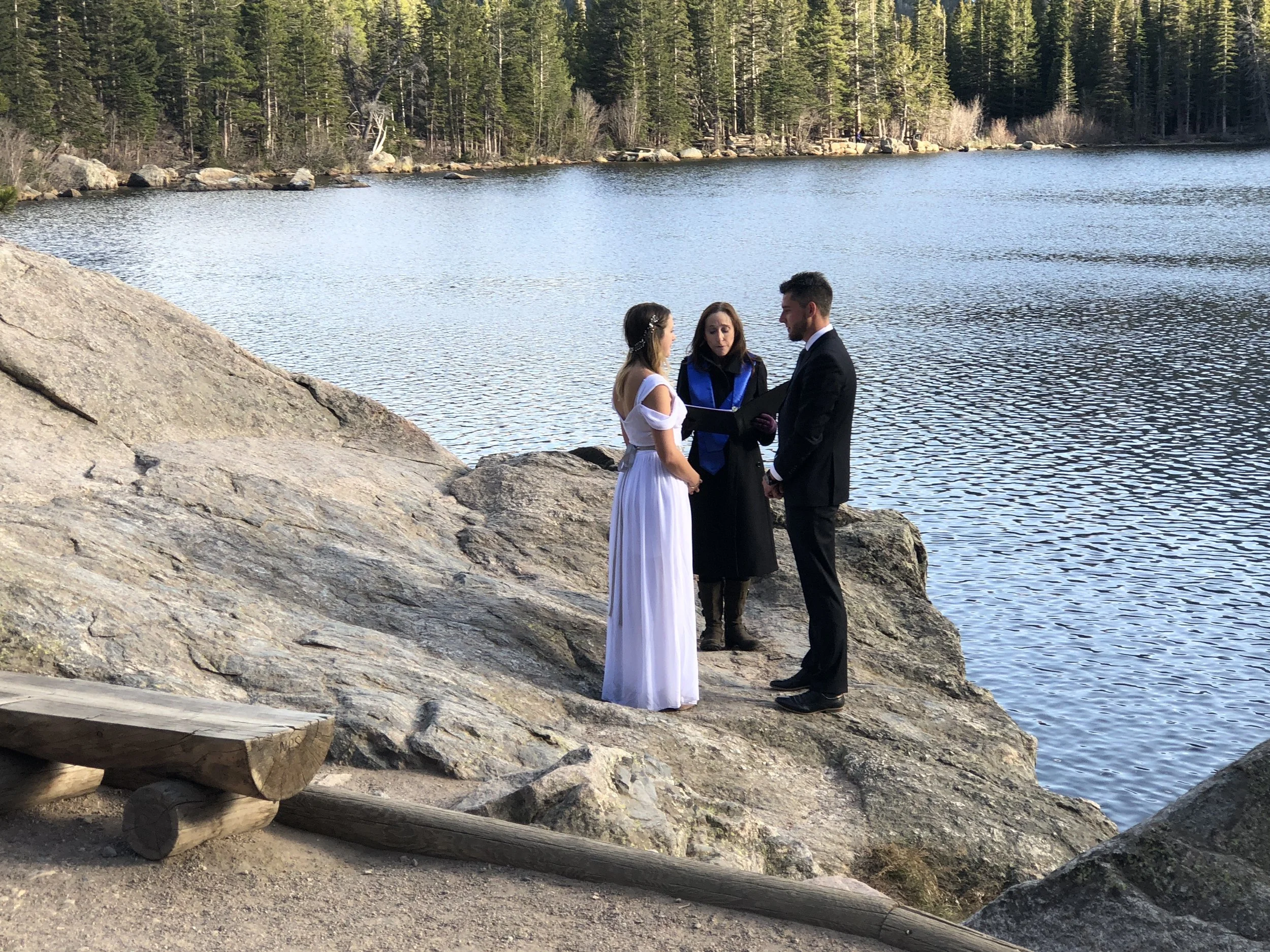
Wide open Colorado spaces swallow sound. Altitude makes people breathe faster, talk faster, and get harder to understand. Even with a mic: slow down. One breath between sentences.
Face your partner, not the view. The mountains are gorgeous. That's why you picked the venue. But your guests need to hear you, and your partner needs to see your face. The photographer will get the Flatirons in the background regardless.
And wear sunscreen. Colorado altitude sun is brutal. Squinting through your vows because you're staring into the glare is not the look you're going for.
Frequently Asked Questions
How long should wedding vows be? One to two minutes each. Roughly 150 to 300 words. Long enough to mean something, short enough to get through without falling apart.
Should we share our vows beforehand? About half of couples do, half keep them a surprise. Sharing in advance prevents the "one person wrote three sentences, the other wrote three pages" problem. Both approaches work. Just agree on approximate length beforehand either way.
What if I cry and can't finish? You probably will cry. Pause. Breathe. Look at your partner. Keep going. Nobody is judging you. If you truly can't continue, hand the card to your best person and have them read each line for you to repeat.
Should I memorize my vows? No. Unless you are a trial attorney or a stage actor, nerves will erase your memory completely. Read from a card or small notebook. Everyone does. Nobody thinks less of you for it.
Do we have to write our own? Absolutely not. Traditional or repeat-after-me vows are meaningful, time-tested, and beautiful. Personal vows are one option, not a requirement. The best vows are whichever ones feel true to who you are.
The Only Rule That Matters
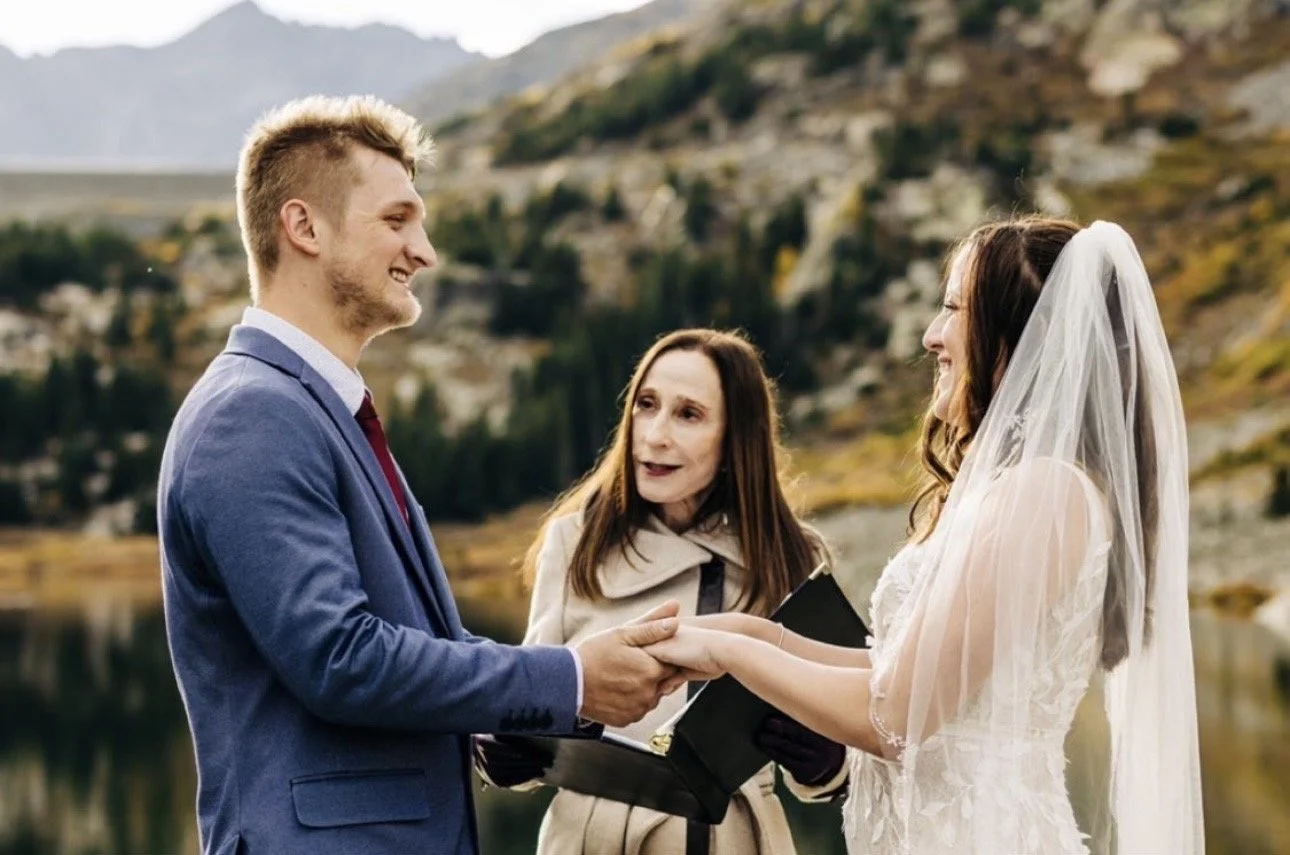
The most sacred and tender of all human relationships deserves words that feel true, even if they're not perfect or polished or borrowed from a Pinterest board.
Whether that's an epic love letter or three quiet sentences. Whether you write something entirely new or speak words that couples have been saying for centuries. Your vows are the heartbeat of your ceremony. Everything else is decoration.
If the blank page feels overwhelming, that's normal. Book a free consultation and we can figure out the right approach together. Your story already exists. Your vows just tell the best part of it out loud.
