What to Expect When You Hire a Wedding Officiant
You just got engaged and everyone's asking about the date, the dress, the venue. But there's one question that makes couples pause: "Who's going to marry you?"
Most people have never hired a wedding officiant before. The whole process feels like a mystery. What do you actually talk about? How do they write your ceremony? Will it feel awkward standing up there with someone you just met?
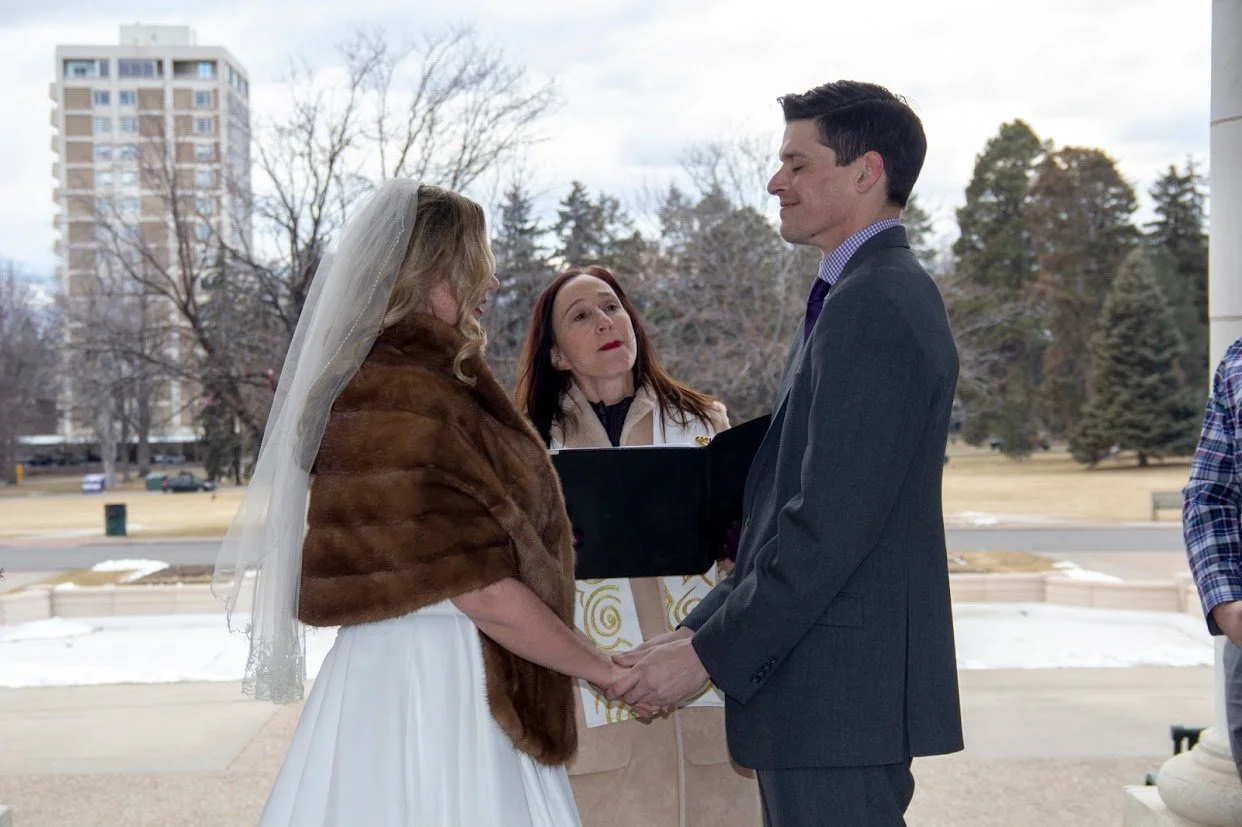
I'm Jane Gorman, a Life Cycle Celebrant based in Boulder. Over the past 26 years, I've officiated 700+ weddings across Colorado and beyond. I became a wedding officiant in 1994 because my husband John and I couldn't find anyone comfortable with our own interfaith wedding.
Every couple I work with starts exactly where you are right now. Uncertain about the process, hoping the ceremony will feel authentically yours, wondering what they're signing up for.
Let me walk you through exactly what happens when you hire a wedding officiant.
How does the consultation with a wedding officiant work?
The first meeting is always a conversation, typically by phone or video call. I want to hear about you two: how you met, your backgrounds, what matters to you about this ceremony, what absolutely doesn't.
Most of this consultation involves me listening. You tell me about your relationship, your families, your vision for the wedding day. I ask follow-up questions to understand your personalities and what would make the ceremony feel like you.
This conversation usually lasts 30-45 minutes. By the end, you'll know if we're a good fit, and I'll have enough information to explain how I'd approach writing your ceremony. Some couples know immediately they want to work together. Others prefer to think about it or talk to other officiants first.
The consultation is free and there's no pressure to decide on the spot. If you want to explore your options first, I wrote a complete guide on How to Choose a Wedding Officiant in Colorado.
What is the 'homework' process and why do officiants use it?
After you decide to work together, I send both of you a detailed questionnaire. You each answer it separately about each other, and you don't see your partner's responses until I read them during the ceremony.
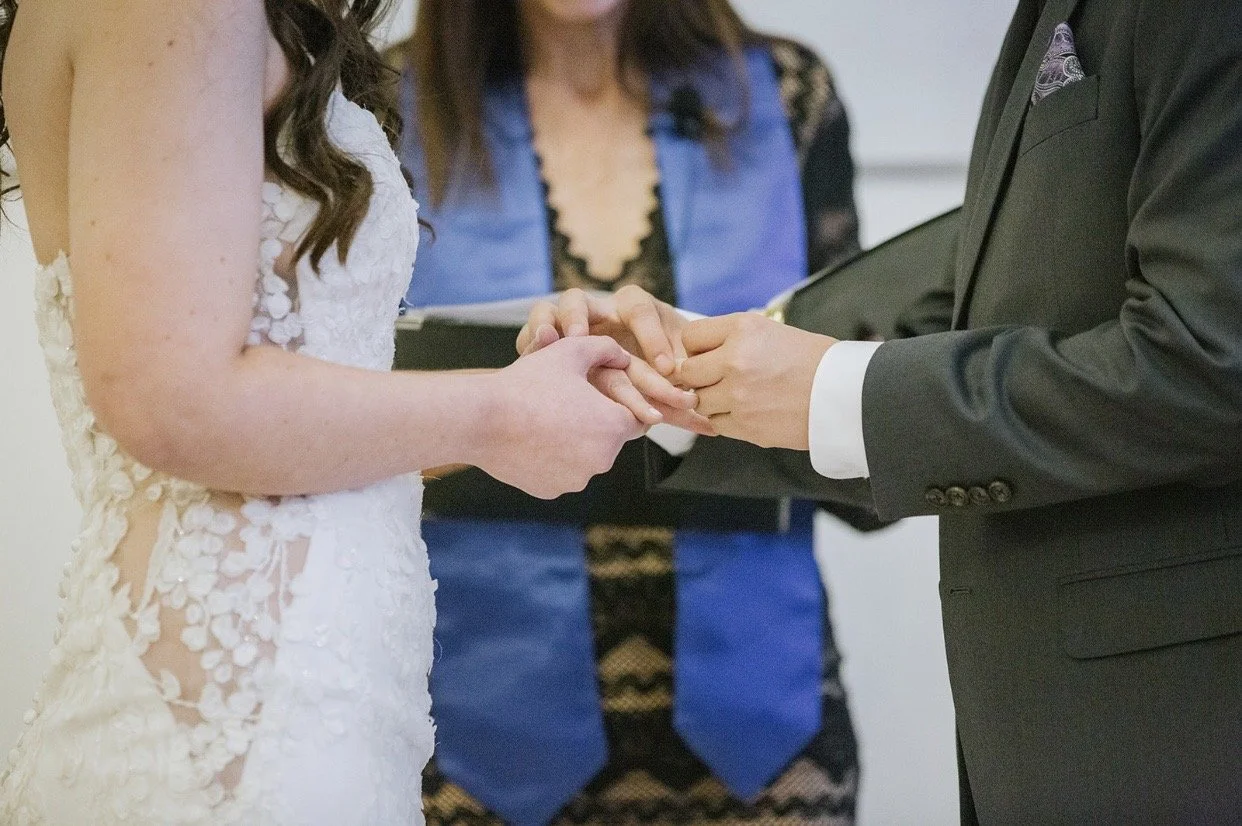
The questions dig deep. What do you admire most about your partner? Tell me about a moment when you knew this person was special. What's something they do that makes you smile every day? How has this relationship changed you?
Some answers come easily. Others make you pause and really think about your person in ways you might not have articulated before.
Couples consistently tell me the homework alone was worth it. Reading what your partner wrote about you, filtered through someone else's voice during the ceremony, hits different than reading their private words. There's something powerful about hearing your love story told back to you by someone who took time to understand it.
The homework takes most couples 30-60 minutes each. I give you as much time as you need to complete it, though most people finish within a week or two.
How much does a wedding officiant cost in Colorado?
My full-service wedding officiant package ranges from $450 to $2,000, depending on the complexity of your ceremony and location. This includes the consultation, homework process, fully custom ceremony script, unlimited revisions, ceremony day officiation, and a printed keepsake copy of your ceremony.
A rehearsal costs an additional $149 and typically takes 45 minutes to an hour. If your ceremony involves a wedding party, processional, or specific rituals, the rehearsal helps everyone feel more confident on wedding day.
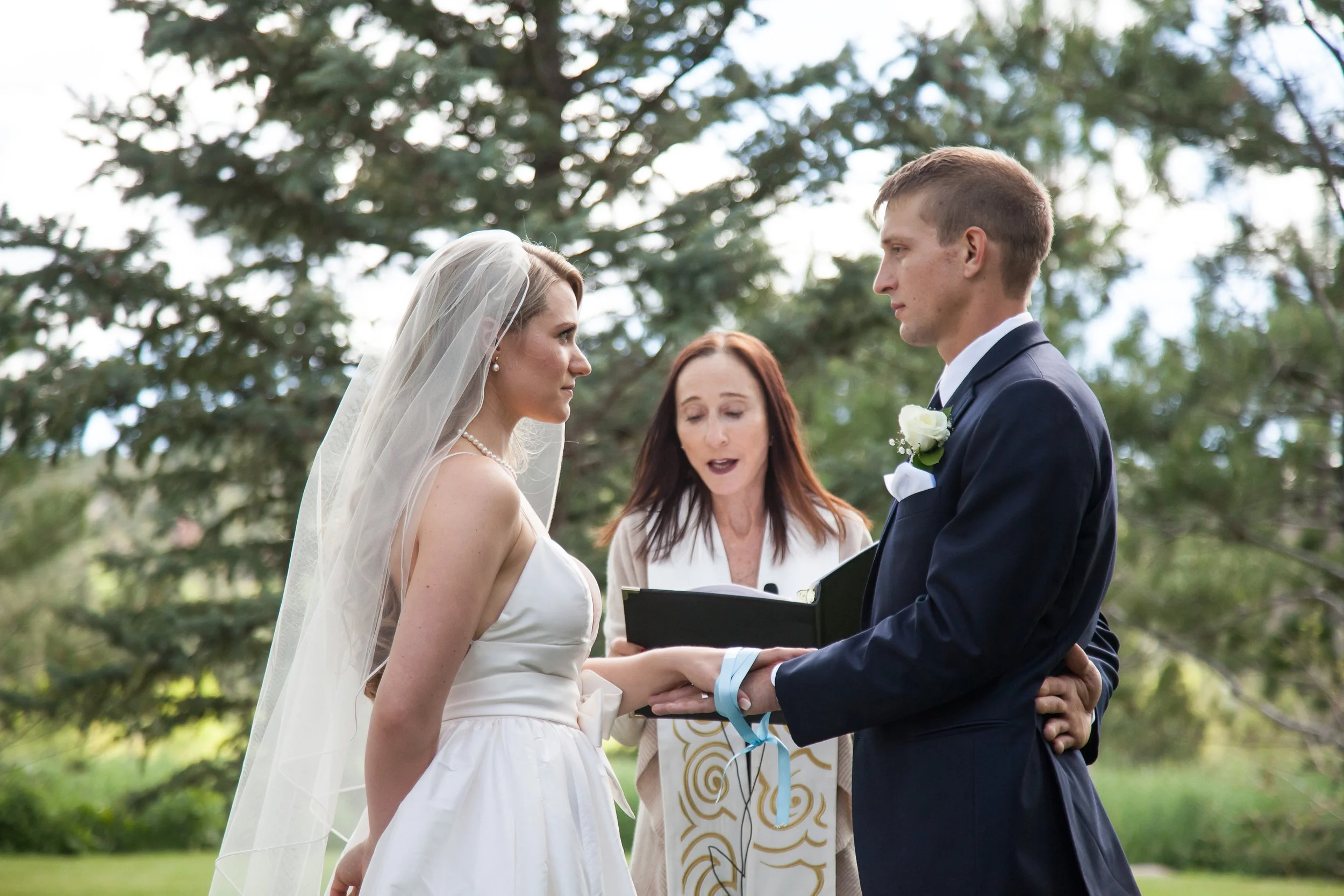
For couples who want a custom ceremony but prefer someone they know to deliver it, I offer a script-only service for $375. I write your personalized ceremony based on the homework process, then you can have a friend, family member, or another officiant perform it. Colorado allows self-solemnization, meaning you don't legally need an officiant at all if you prefer to marry each other.
My husband John is also an experienced officiant who can perform ceremonies when I'm already booked, maintaining the same personalized approach and pricing structure.
How do you write a custom wedding ceremony?
I don't use templates. Every ceremony starts from scratch.
After reading your homework responses, I write a ceremony script specifically for you two. I pull stories from your questionnaires, weave in your humor and personality, and incorporate any faith traditions or cultural elements you want included.
If you come from different religious backgrounds — roughly 4 in 10 recent marriages are interfaith — I blend those traditions thoughtfully. I've performed ceremonies mixing Jewish and Catholic traditions, Hindu and secular elements, Buddhist practices with family customs that don't fit any category. Having navigated my own interfaith wedding, I understand how important it is to honor both backgrounds without favoring either.
The ceremony should sound like it could only belong to you. When I've done my job right, guests come up afterward convinced I've known you for years. A photographer once told me mine was the best ceremony she'd ever witnessed because it felt so personal and authentic.
The first draft usually takes me several hours to write, drawing from everything you shared in your homework plus insights from our initial conversation.
What happens during the ceremony review process?
I send you the first draft of your ceremony for review, and we collaborate from there. Some couples read it and say, "Perfect, don't change a word." Others want to adjust the tone, add a reading, or modify sections that don't quite land.
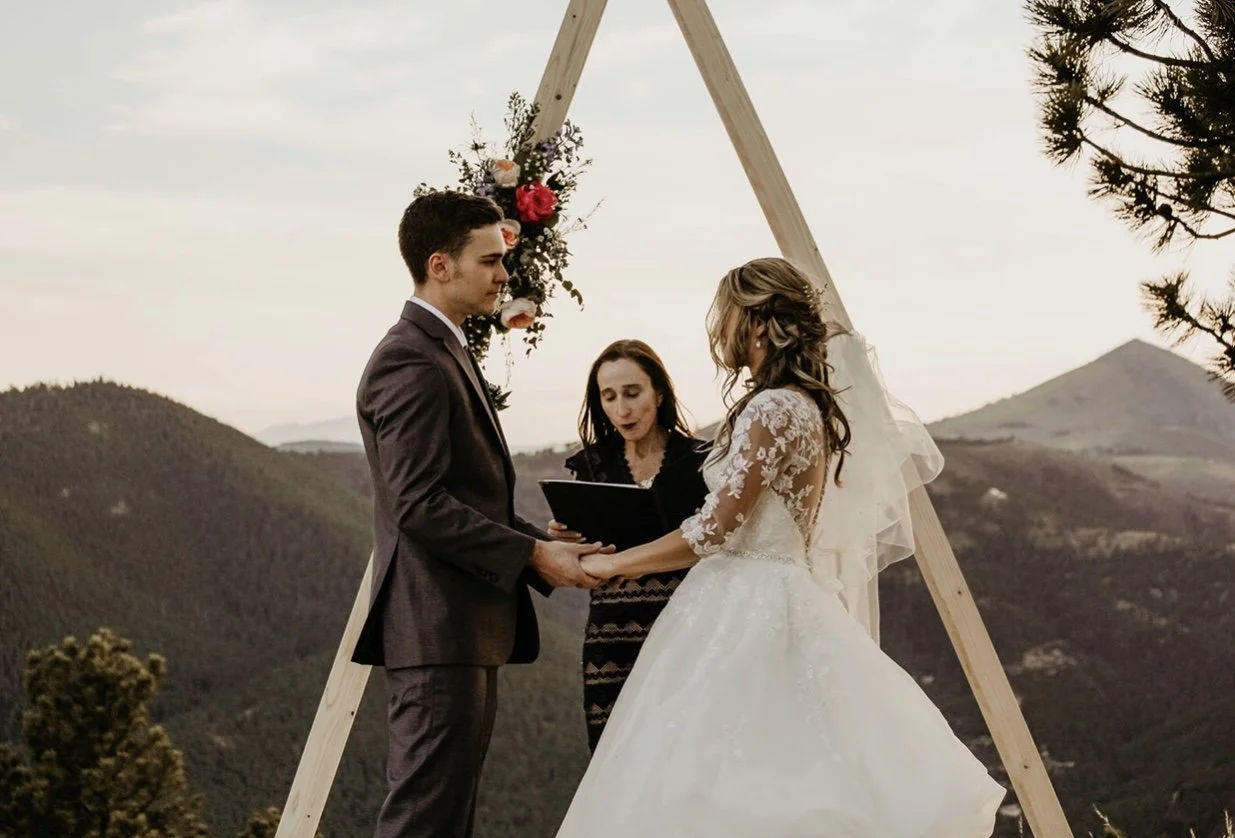
We revise as many times as needed until you're genuinely excited to experience this ceremony. I'm invested in getting it right. This is your wedding day, and the ceremony should feel exactly like what you envisioned.
The revision process typically involves 1-3 rounds of feedback, though I've worked with couples through many more iterations when they had complex family situations or specific vision requirements. Most couples finalize their ceremony 2-4 weeks before their wedding date.
During this process, we also confirm any special elements: unity rituals, cultural traditions, specific readings, involvement of children or family members, or unique elements you want to incorporate.
What happens on ceremony day?
I arrive 30-45 minutes before your ceremony starts. I check the setup, confirm microphone and sound systems work, and greet your guests as they arrive.
I tell your guests this should be a celebration, not a silent observation. When you walk in, I want them cheering, clapping, and showing their excitement. That energy shift makes a huge difference in how the ceremony feels.
During the ceremony, I guide everything so you don't have to think about logistics. Ring exchanges, readings, vows, unity rituals. You just need to focus on each other and the moment.
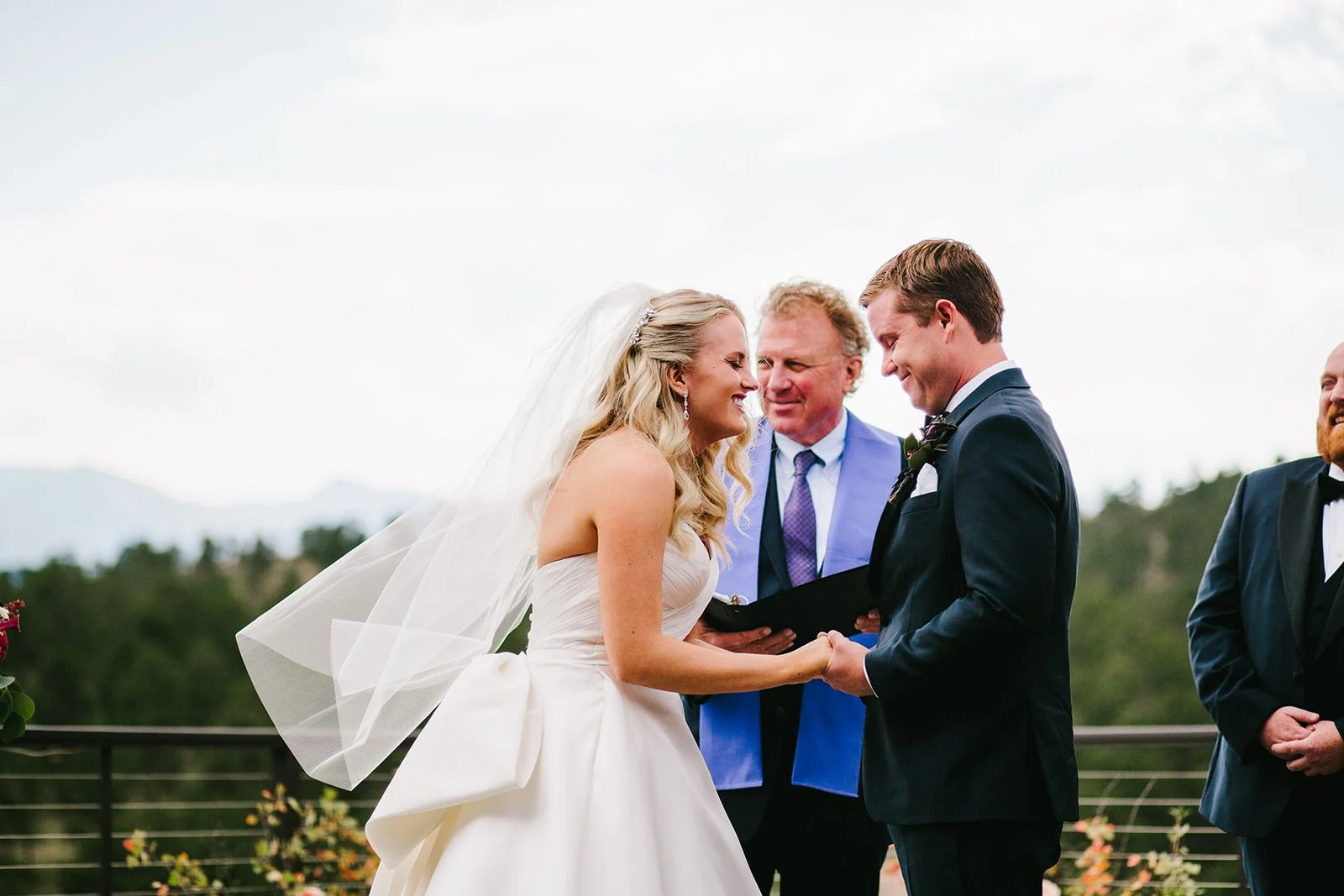
My Husband John McCulloch officiating a wedding in Colorado.
My husband John often attends, he’s also an officiant and is there to back me up with love and support.
And Colorado weather keeps you humble. I once finished a ceremony inside a car at Rocky Mountain National Park because 40-mile-per-hour winds made it impossible to stand at the scenic overlook. We laughed, finished the vows, and the couple still says it was the best story from their wedding day.
After your final kiss, you receive a beautifully printed keepsake copy of your complete ceremony script. Many couples frame them or read them on anniversaries.
Do I need a religious officiant if I'm not religious?
You absolutely do not need a religious officiant for a meaningful wedding ceremony.
I'm an interfaith specialist who has performed deeply personal ceremonies with zero religious content. These ceremonies focus on your relationship, your commitment to each other, and the life you're building together. They can include readings from literature, personal vows, unity rituals that reflect your interests, or family traditions that matter to you.
Some couples incorporate spiritual elements that aren't tied to organized religion: nature-based ceremonies, philosophical readings, or rituals borrowed from various traditions that resonate with them personally. The ceremony should reflect who you are, regardless of your religious background or lack thereof.
Non-religious ceremonies can be just as meaningful and emotional as religious ones. I've seen guests moved to tears by ceremonies that focused purely on the couple's love story and commitment, without any prayer or religious language.
What if we want to include family traditions?
Family traditions can be beautifully woven into any ceremony, regardless of your religious backgrounds.
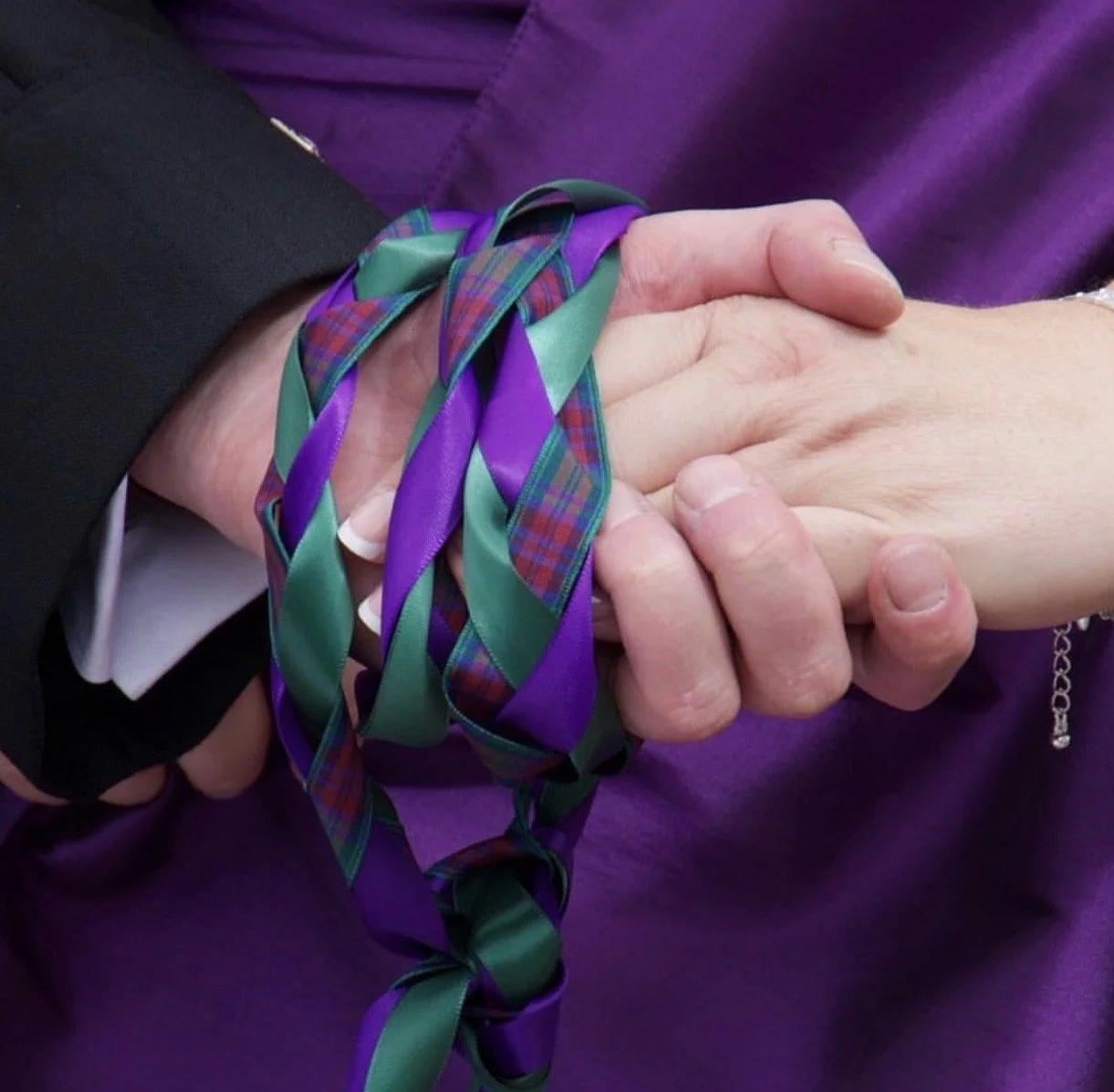
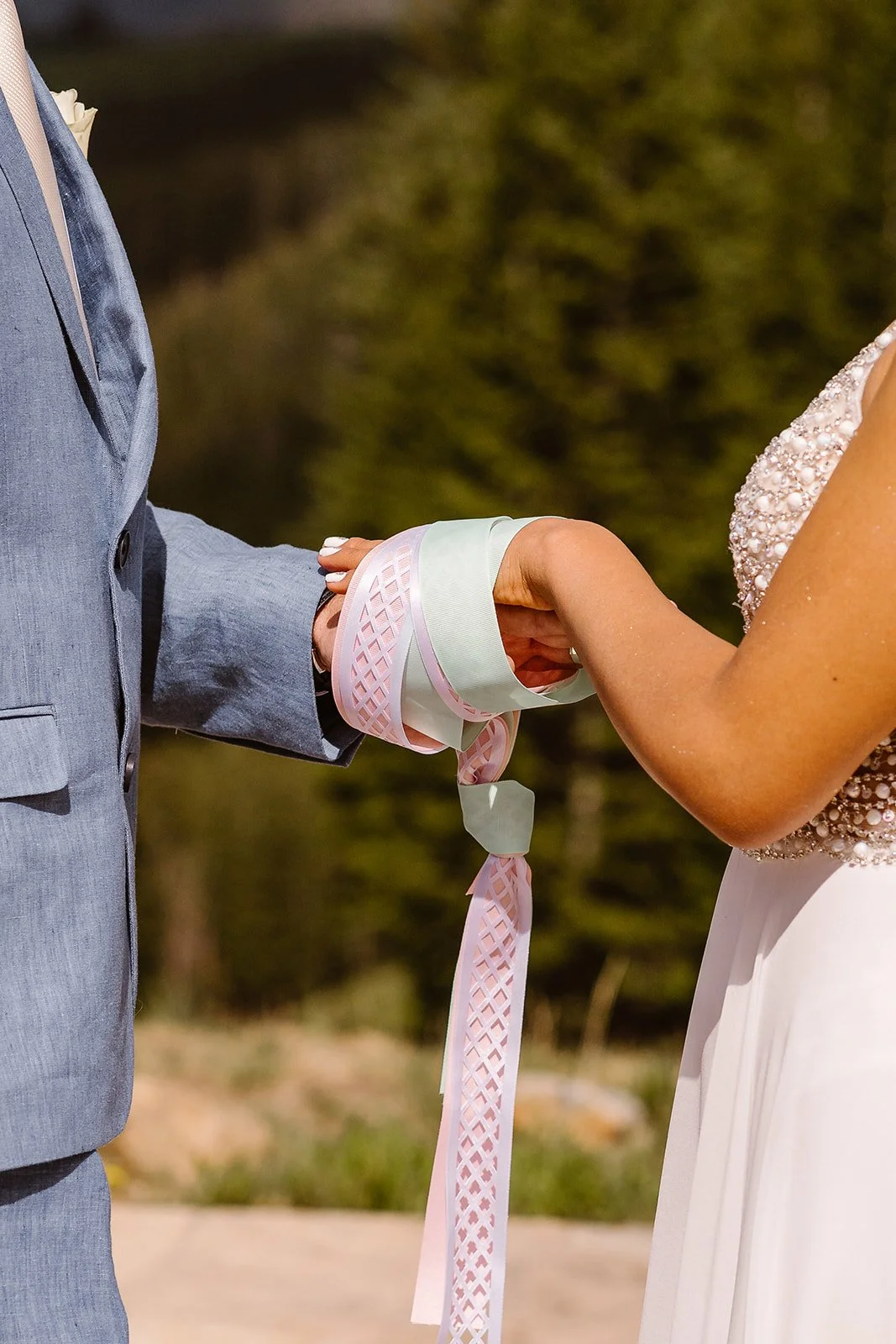
I've incorporated everything from Scottish handfasting to Filipino cord ceremonies, Jewish glass breaking to Hindu fire rituals, family recipes read as blessings to military traditions honoring service members. The key is making these elements feel integrated with your story, not just added on.
Sometimes families have traditions that don't fit standard religious categories. Maybe your grandmother always said a specific blessing at family gatherings. Maybe your dad has a ritual from his military service. Maybe there's a family story that gets told at every gathering. These personal traditions often create the most meaningful ceremony moments.
During our planning process, we discuss what family elements matter to you and figure out how to include them authentically. I can explain the significance of traditions to your guests if needed, ensuring everyone understands and participates appropriately.
How far in advance should I book a wedding officiant?
For Colorado weddings, I recommend booking 6-12 months in advance, especially for summer and fall weddings.
Colorado's peak wedding season runs from May through October — per The Wedding Report, approximately 70% of U.S. weddings occur in these months — with September and October being particularly busy due to the aspen colors and ideal weather. Weekend dates in these months book up quickly.
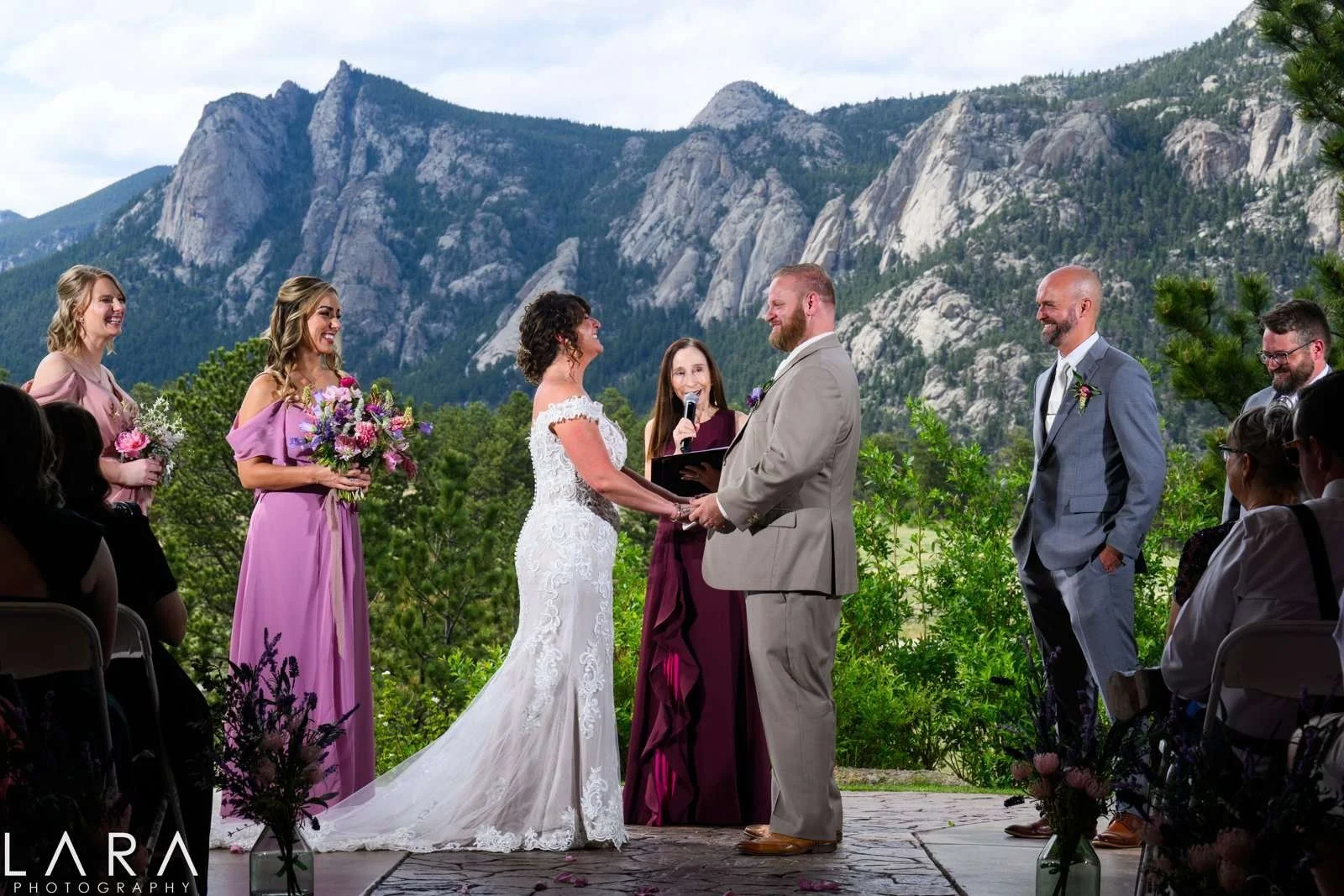
Winter and spring weddings offer more flexibility, though you'll still want to book at least 3-4 months ahead to ensure availability and give us adequate time for the homework and writing process.
If you're planning a last-minute wedding or elopement, don't panic. I've created beautiful ceremonies with just a few weeks' notice. The homework process can be expedited, and I can write ceremonies quickly when needed. Call me even if your wedding is next month.
For destination weddings in Colorado, booking early helps ensure I can travel to your location and coordinate with your other vendors effectively.
Frequently Asked Questions
Do you perform same-sex weddings? Absolutely. I welcome couples of all orientations, backgrounds, and traditions. Love is love, and every couple deserves a ceremony that celebrates their unique relationship.
Can you legally marry us in Colorado? Yes, I'm licensed to perform marriages throughout Colorado. I handle all the legal paperwork and ensure your marriage is properly recorded with the state.
What's a Life Cycle Celebrant? A Life Cycle Celebrant is trained to create meaningful ceremonies for all of life's important transitions: weddings, vow renewals, baby namings, memorials, and other milestone celebrations. The training focuses on personalized ceremony creation and inclusive practices.
Do you travel outside Boulder? I serve couples throughout Colorado and have traveled internationally for destination weddings. Travel fees apply for ceremonies more than 50 miles from Boulder, calculated based on distance and time required.
What if it rains on our outdoor ceremony day? Colorado weather is unpredictable, so we always discuss backup plans during planning. I've performed ceremonies in snow, rain, and high winds. We adapt and keep going. Most venues have indoor alternatives, and I bring weather-appropriate equipment.
Can we write our own vows? Absolutely. Many couples choose to write personal vows in addition to the ceremony I create. We coordinate the timing and flow so your personal vows integrate seamlessly with the overall ceremony structure.
How long are your ceremonies? Most ceremonies run 15-25 minutes, depending on the elements you include. Intimate ceremonies with just the legal requirements might be 10-15 minutes. Ceremonies with multiple readings, unity rituals, and cultural elements can run 25-30 minutes.
What happens if you get sick or have an emergency? I have a network of experienced officiants who can step in if needed, including my husband John who knows my process and style. In 26 years of officiating, I've never missed a ceremony, but I always have contingency plans in place for true emergencies.
Ready to start planning your ceremony? Contact me here for a free consultation. I typically respond within 24 hours and love hearing about couples' unique love stories.
